













As the country music genre expands, there are more and more artists that don’t necessarily fit the stereotype of pure country and some would consider “genreless.” Artists like The Lumineers, Noah Kahan or Mumford and Sons err on the folk side, while guys like Tyler Childers, Colter Wall and Caamp tout a completely unique sound. Known for his folk-country style and heartfelt lyrics, Zach Bryan continues to branch further from country than he has ever before.
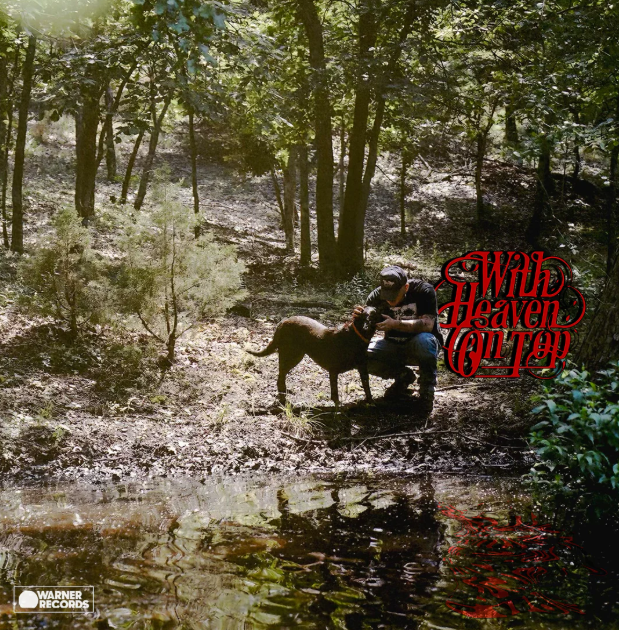
Bryan released “With Heaven On Top” Jan. 9, a 25-song album with each track getting its own attention and analysis. The album even garnered some backlash from the Secretary of Homeland Security (more about that later).
Although he has always slightly diverged from the “traditional country” feel with his style of music, this new album has a completely new vibe while still incorporating poetic lyrics and beautiful storytelling. The album features a brass section, which is rare in this genre of music. The storytelling has the same elegance of Bryan’s previous work, but is more mature in the sense of an older Bryan. It is more about his life as a musician and handling his new circumstances than his middle class American uproots.
There is something that needs to be said about an artist that doesn’t rely on others to create their art. It’s one thing to have a great voice like Morgan Wallen and just sing someone else’s work. Bryan shirks the stereotypical songs about a pickup truck or cowboy boots and opts for heartfelt lyrics about his own life.
Bryan utilizes poetry in the album, much like his Lucky Enough poem in his last album, The Great American Bar Scene. His poem Down, Down, Stream opens the new album and sets the stage for the entire meaning of the record. It prefaces his life memories and experiences.
It starts off taking place in an old man’s apartment exemplifying the importance of moments in life. It then shifts to Bryan’s life, using the repetition of the phrase “everything had gone down, down stream” meaning all the memories of life passed him by, moving into other bodies of water. The metaphor of the stream being feelings and moments is portrayed when he says “before he could drink any of it, it’d already passed him by,” highlighting a human experience, not being capable of grasping certain feelings. The stream represents our constant state having many encounters and experiences, but its constant motion mirrors human perseverance. In the poem he wonders if this stream of life leads anywhere.
Bryan then moves to a traditional feeling, slower song that includes harmonica in “Runny Eggs”. The low part of guitar and the bass somewhat represent the bottom of a stream. It is gentle and subtle, but persistent and nothing will stop it. This song continues the theme of the album with moments in life that you grow and learn from. It starts to introduce the repeating theme of alcoholism and Christianity, which we see more than ever in this album.
Moving to the next song “Appetite,” it shocks you with an energetic brass intro that repeats throughout the song. This is first introducing his new style that we have not seen yet, with exception of the single “Streets of London” that didn’t gain much traction. “Appetite” expresses his hardships with maturing in life and getting old in the first verse: “Everyone I know got older, told my drunk ass to get sober, Settle down and have some kids be content with all of it- but what if I don’t want children, to grow up like their father willing to stir shit up and start a fight, work themselves up an appetite.” That’s the line that portrays the theme that comes up many times in the song “I’ve worked myself up an Appetite.”
He continues this story telling of his life and how he’s matured. In a lyrical masterpiece “DeAnns Denim” (DeAnn is his mom who passed away in 2016) he says “You ain’t Jesus Christ cause you don’t think twice Sunday, when you pass the liquor store” introducing his faith.
And in a catch song “Say Why” immediately following he professed the number “40” countless times, applying it to his life. 40 is a significant number in the Bible, appearing many times throughout the different books of the Bible.
Throughout the entire album, on par with all of his music, it is stacked with imagery to relatable experiences. In his song “Skin” he references his past relationship when he got a tattoo of his old partner. He says “I’m taking a blade to my old tattoos, I’m draining the blood between me and you, I’m taking a blade to my old skin, and I ain’t ever touching yours again.” This lyric gained a lot of attention as Bryan’s breakup with social media influencer Brianna Chickenfry was very public in October 2024. Bryan got a tattoo of Chickenfry on their second date which is likely what the artist is referring to.
The theme continues throughout the next few songs, continuing a story with unanswered questions and unfinished stories. This isn’t the problem though. The audience is supposed to be left with questions, but he goes off the storyline around song 10. There is a ton of speculation on this as many people think the record is too long and dragged. That being said, he does wrap it all back together with the final, titular track “With Heaven on Top”.
The final songs of the album don’t necessarily fit into the storyline perfectly, but tell their own stories with catchy choruses that keep listeners coming back.
Toward the beginning of the album he features a song called “Bad News,” which talks about the struggling state of America.
Furthermore, the line “I got some bad news, the fading of the red white and blue” stirred up many national debates and provoked Secretary of Homeland Security Kristi Noem, who criticized the song as “disrespectful to law enforcement and the country.” Bryan replied by explaining he was a Navy veteran who loves this country.
Bryan eventually gets to a song “If They Come Lookin’” which feels like a new genre. This indie rock-like song is very catchy and is something we really haven’t heard before from him. Directly after this song, comes “Rivers and Creeks”. There have been multiple accounts of people saying they had to check for a feature as one part doesn’t sound like Zach Bryan at all. He completely contorts his voice and essentially sounds identical to Bruce Springsteen. He also intentionally stretches his voice in a way it almost highlights the imperfection. This is part of the purpose of the song as it adds to the mood and tone of the climax located in the chorus. This song especially uses many similes, metaphors and imagery to demonstrate how love is similar to the changes of nature.
This album branched out vocally and instrumentally more than ever although there are still similarities.
The last song is almost an exact copy of the song “Northern Thunder” (Great American bar scene) in the sense of the melody through the verses and chorus. “DeAnns Denim” is extremely similar to “Dear Miss”. This theme happens a few more times in the album. It’s unfair for this to define the album though as each of these songs tells a different story with different lyrics. They have different instruments and are all solid songs that serve a purpose. All the songs named were hits regardless if they are similar to others.
“I’m assuming this record is just like all the other ones and there’s gonna be a billion people saying it’s over produced,” Bryan said. “So I sat down in a room by myself and recorded all the songs acoustically so I didn’t have to hear everyone whine about more stuff. There’s mistakes and I didn’t redo any of them.”
This version was released three days after the initial release. The truth is though, the first one wasn’t over produced. It was balanced. Critics will say it was like his old stuff, but they will also find a way to say that it’s too different. Bryan wanted to silence both of these opinions so he released both. He gave us exactly what we asked for, but the consensus will be dependent on if people will give it a chance. “With Heaven on Top” is not Bryan’s greatest record, but it is great.