








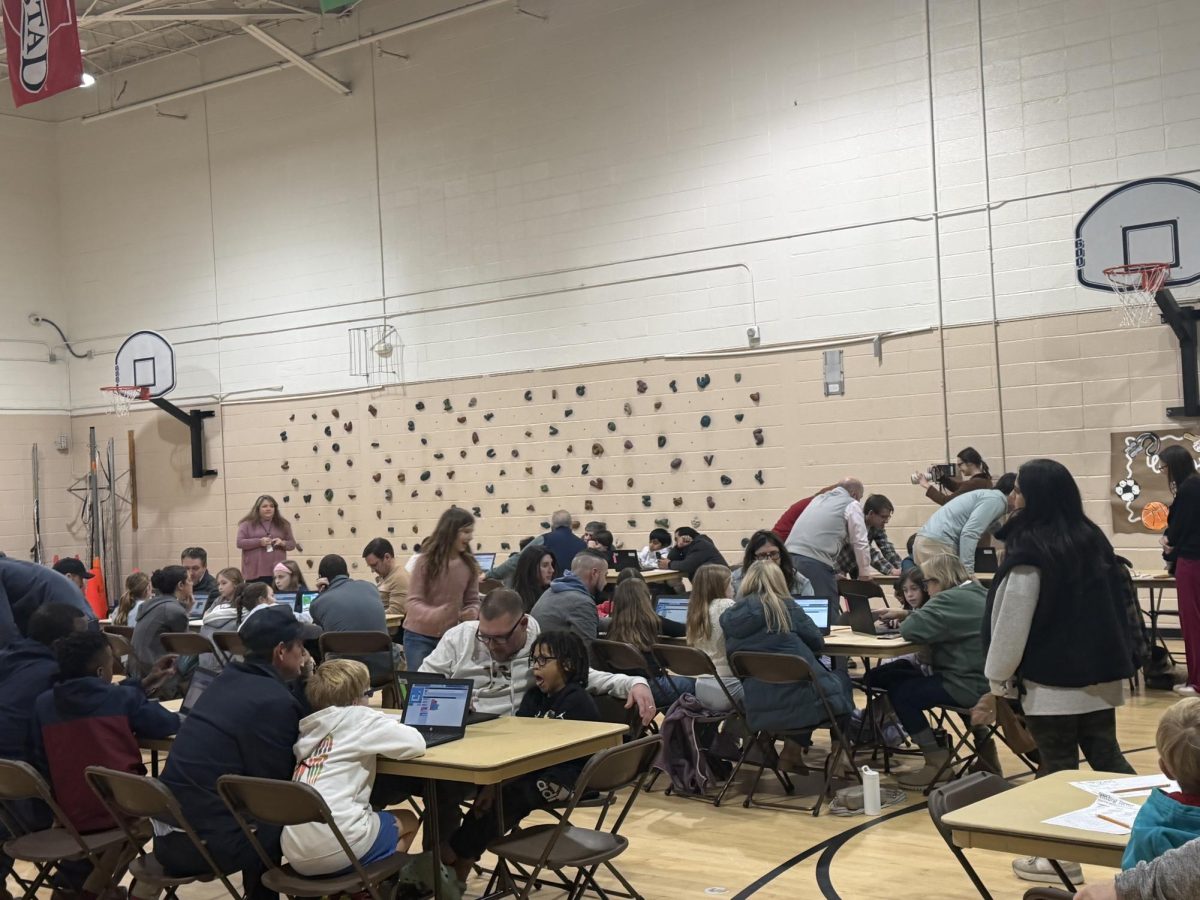
This Philanthropy Month, computer science classes hosted three Family Coding Nights for Homewood fourth graders to demonstrate their mastery of coding skills using code.org.
During the event students solved puzzles with assistance from elementary school computer science teachers. Kim Shores, who teaches at Shades Cahaba, facilitated her school’s night Feb. 5.
“It’s similar to them coming into the classroom for an open house and showing their parents the things that they’ve been doing in their general classroom,” Shores said. “[They] walk through some puzzles with their parents and solve these puzzles together with them and teach them all the things they’ve been learning up until this point.”
Coding night is designed to build on foundational skills elementary students have been taught since kindergarten. Funded through the Homewood City Schools Foundation, the event comes as part of a multi-year curriculum created to give students useful skills for job placement.
“What they do gets more difficult and more challenging,” Shores said. “A lot of it is things they’ve previously done and some of it is things we’ve just started or things that we might even be working towards.”
The program students use is called code.org, a K-12 platform offering a variety of courses in Python and Java to accommodate different learning styles. Beginners solve puzzles by using basic block coding.
“The students chose from a different set of blocks to make the character move to a certain point,” Shores said. “For example, in the 1st few puzzles, students are taking the Angry Birds and programming it to reach the pig by using blocks like to turn left, turn right and move forward.”
AP Computer Science A student Macie Dwyer volunteered for her first coding night at Shades Cahaba.
“I like to go out and volunteer and I love kids, getting to teach them is fun,” Dwyer said. “The kids would come with their parents and I just walked around and helped them figure out what’s wrong with their code.”
The program included activities for parents to try their hands at coding alongside their children.
“They wanted parents to try some without the kids’ help, so the parent can understand what their child is going through, and how they problem solve,” Dwyer said.
Coding night is exclusive to fourth graders because of scheduling and prior knowledge.
“Our third graders have an event that is already planned for them throughout the year and the fifth graders have several things they already do as well,” Shores said. “And so fourth grade is kind of the grade level that we knew the puzzles would have the knowledge to complete the majority of the puzzles, which is helpful.”
The event was possible through the help of computer science teachers Fred Major, David Marshall and HHS volunteers.
“Coding can be very basic but then it can also turn into some really fun and exciting lessons for them,” Shores said. “I think that students are excited to show their parents and their adults what they’ve been learning.”